


Salt flows through my life in every sense – on my plate and in my veins. I cook with a lot of it (probably too much!), I love salty food, and let’s be honest, I spend two to three hours a day in the ocean.
Unsurprisingly, salt also plays a vital role in the lives of the people here in Gozo. For centuries, they’ve been harvesting it using traditional salt pans: most dating back to Roman times. These ancient systems were designed to take advantage of the sun and sea to evaporate seawater, leaving behind the prized crystals. This technique has been used across the Mediterranean, including in Malta and Gozo, and remarkably, it’s still used today in exactly the same way.
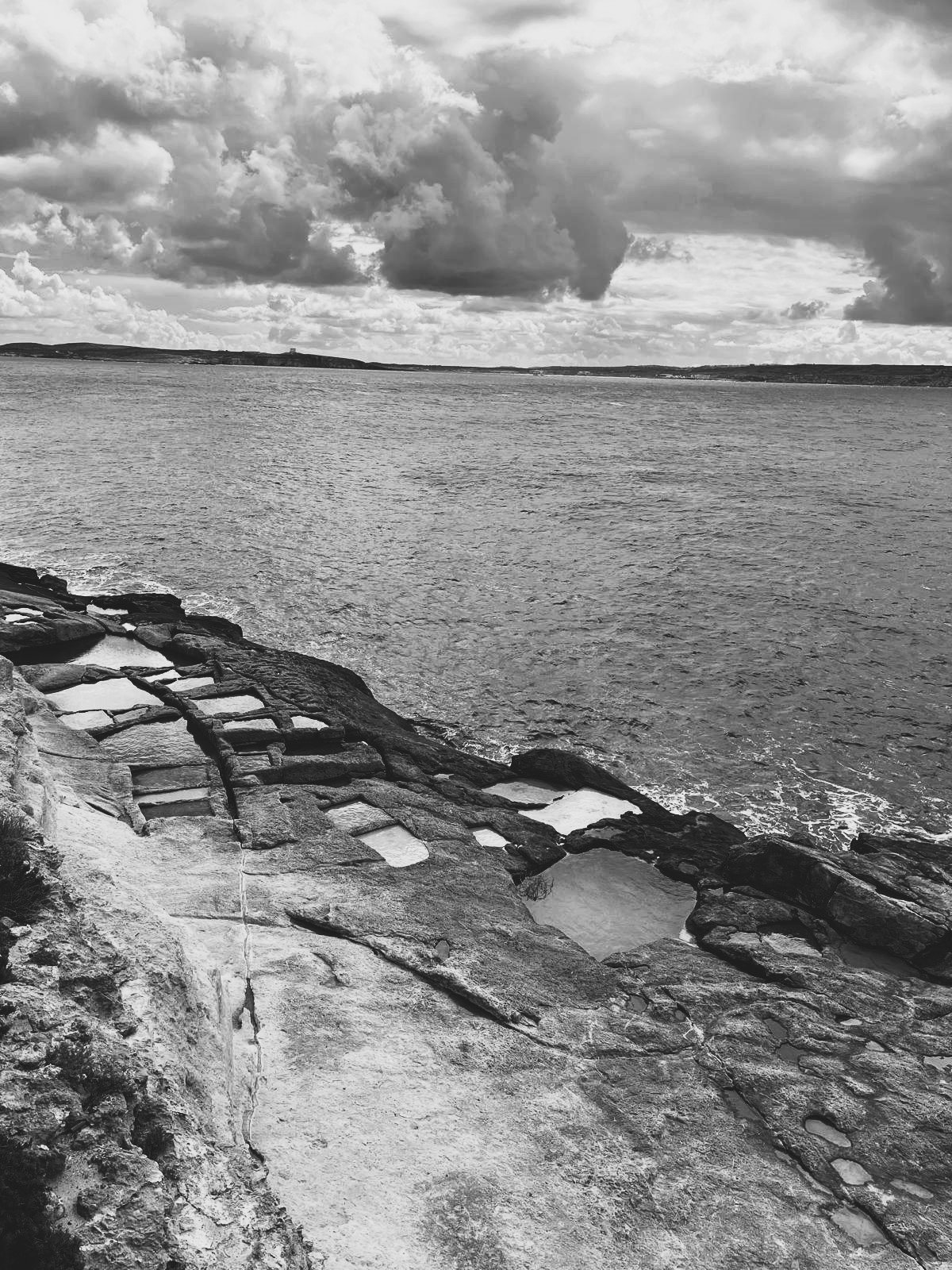
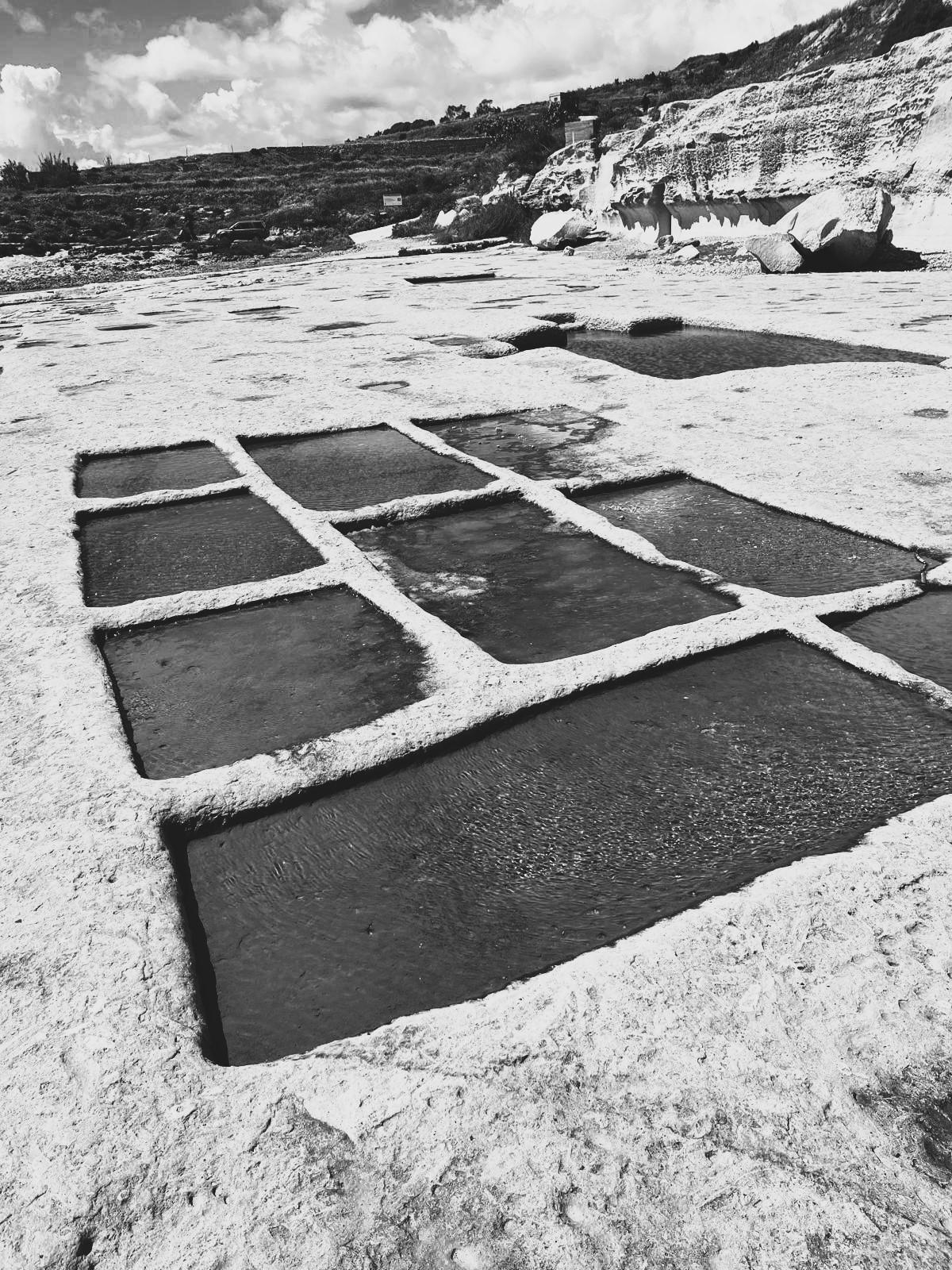
A couple of weeks ago, we went diving on the north coast of the island and to get there, we had to cross the island, passing through Marsalforn. Besides being one of the most popular resort towns in Gozo, Marsalforn is also famous for its salt pans, which are still in active use.
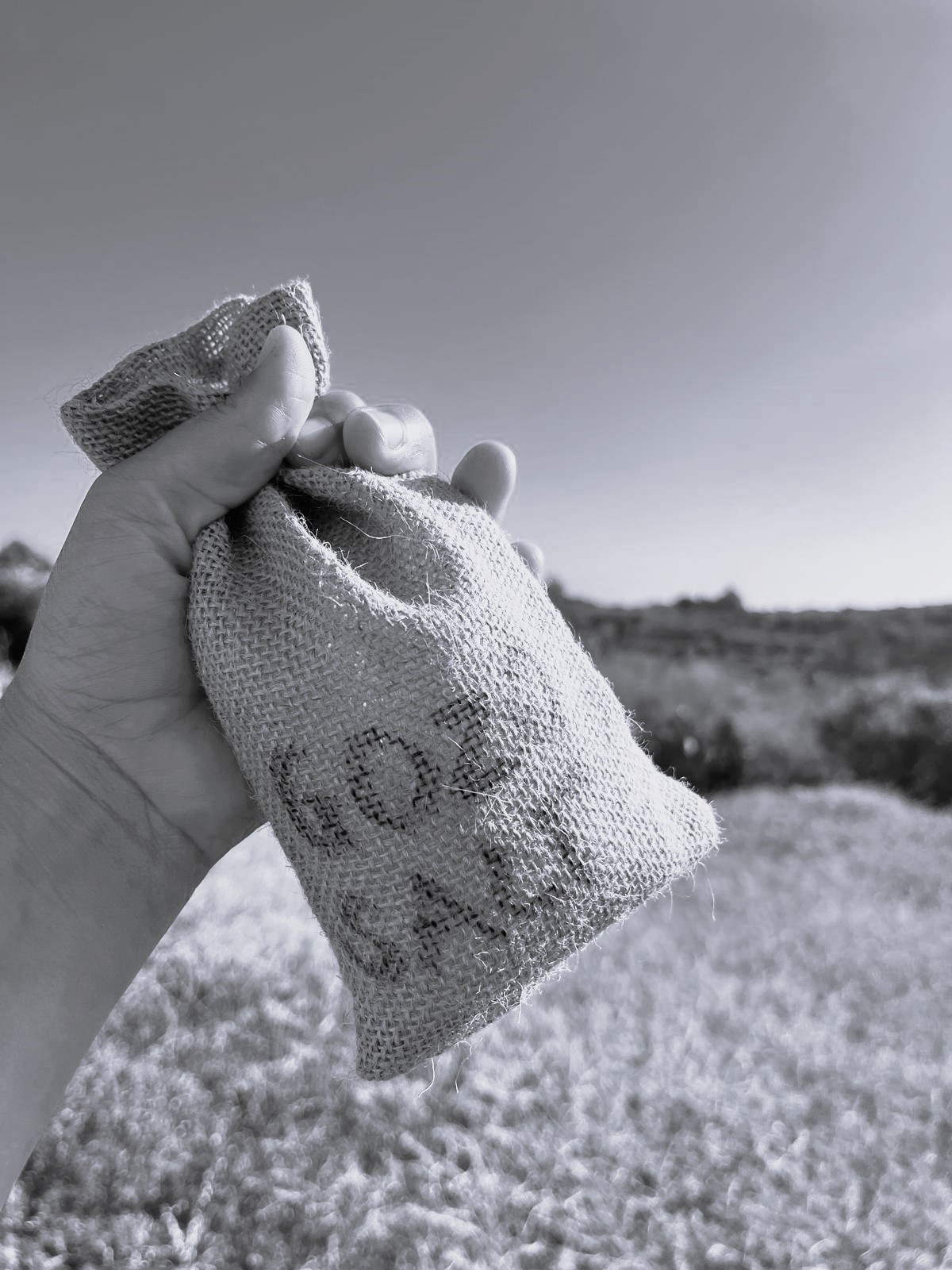
It was the final dive for one of my clients, and she wanted to take home something special. So we made a little stop at the salt pans, right across from a small stone building carved into the hillside. We walked up, and there he was: the old man sitting outside in the sun, selling his hand-harvested, hand-packed salt.
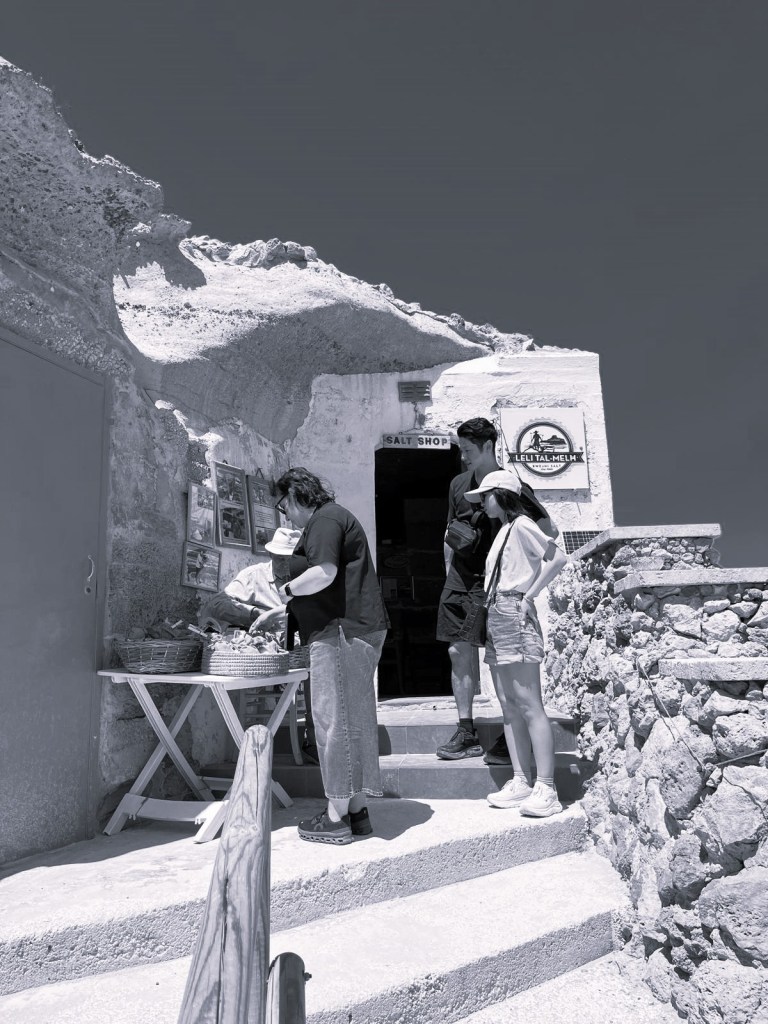
Salt from Xwejni is harvested once a week during the summer season, roughly from mid-May until early September, weather permitting. Sunshine and hot days are crucial for a good harvest. Rain or storms disrupt the entire process, meaning no salt can be collected during those times.
After each harvest, the salt pans are manually refilled with seawater using a motor pump from larger pools. The shallow pans are then left to dry under the sun for about seven days, during which salt crystals begin to form. Because the water is already highly concentrated from evaporation in the larger pools, the crystallization process is quicker, allowing for fresh salt to be gathered each week.
The salt is then swept using thick-bristled brooms and brushes, gathered into small heaps, and transferred to buckets. These buckets are emptied onto a flat surface, where the salt is formed into larger mounds, covered with cloth, and left to dry for 24 hours. Once dry, it’s packed into 30-kilogram bags and stored – no further processing needed.
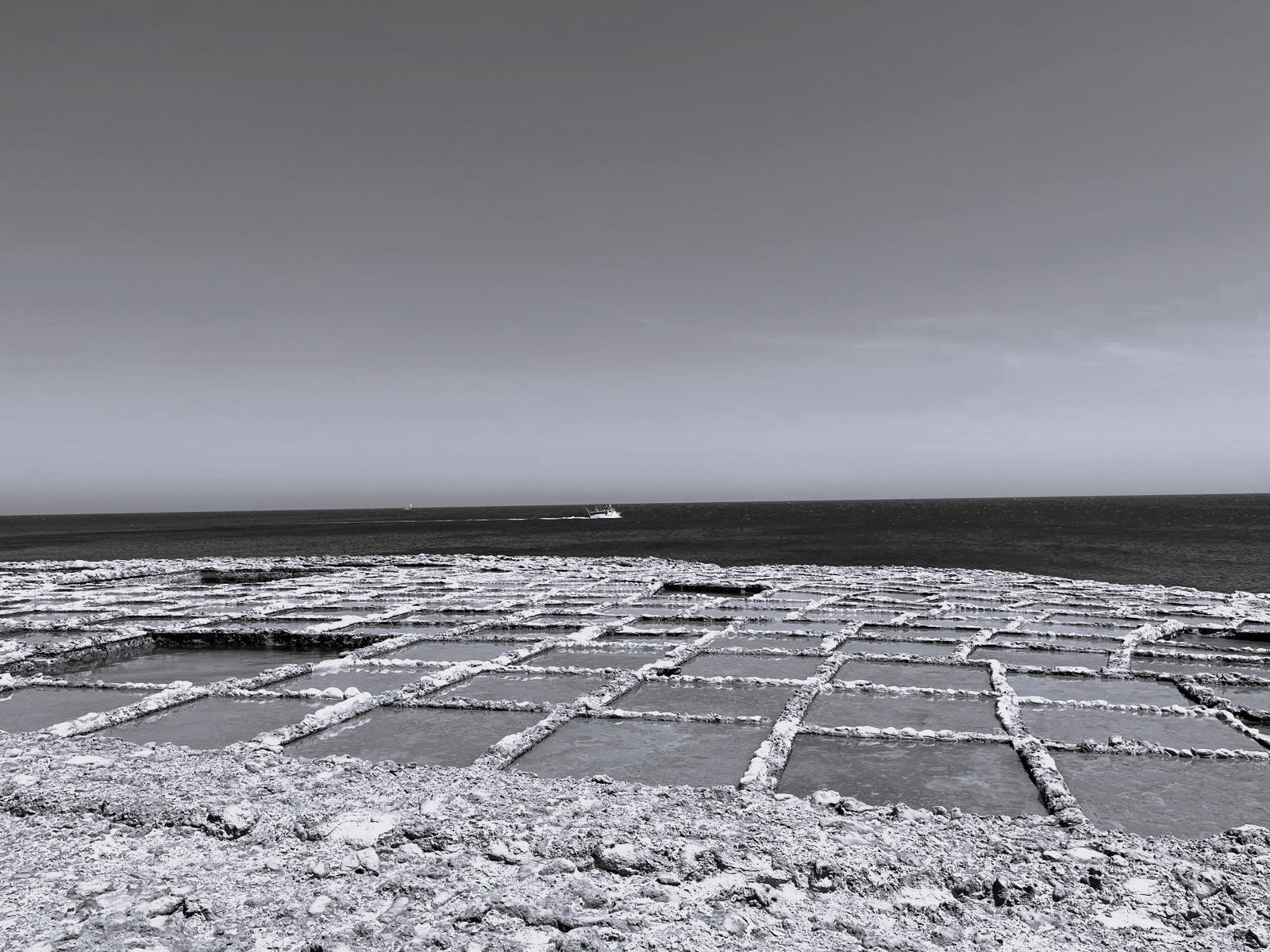
Watch this beautiful video to immerse yourself in nature, meet the family behind the process, and see how salt is made here on the island. And when you visit Gozo, don’t forget to stop by and support them by buying a pack. If you dive with me, I’d be more than happy to introduce you myself!

 Domka Dives
Leave a reply to Szabó Géza Cancel reply